Mills Act Contracts and Property Taxes in Anaheim’s Historic Districts
September 24, 2026
September 24, 2026
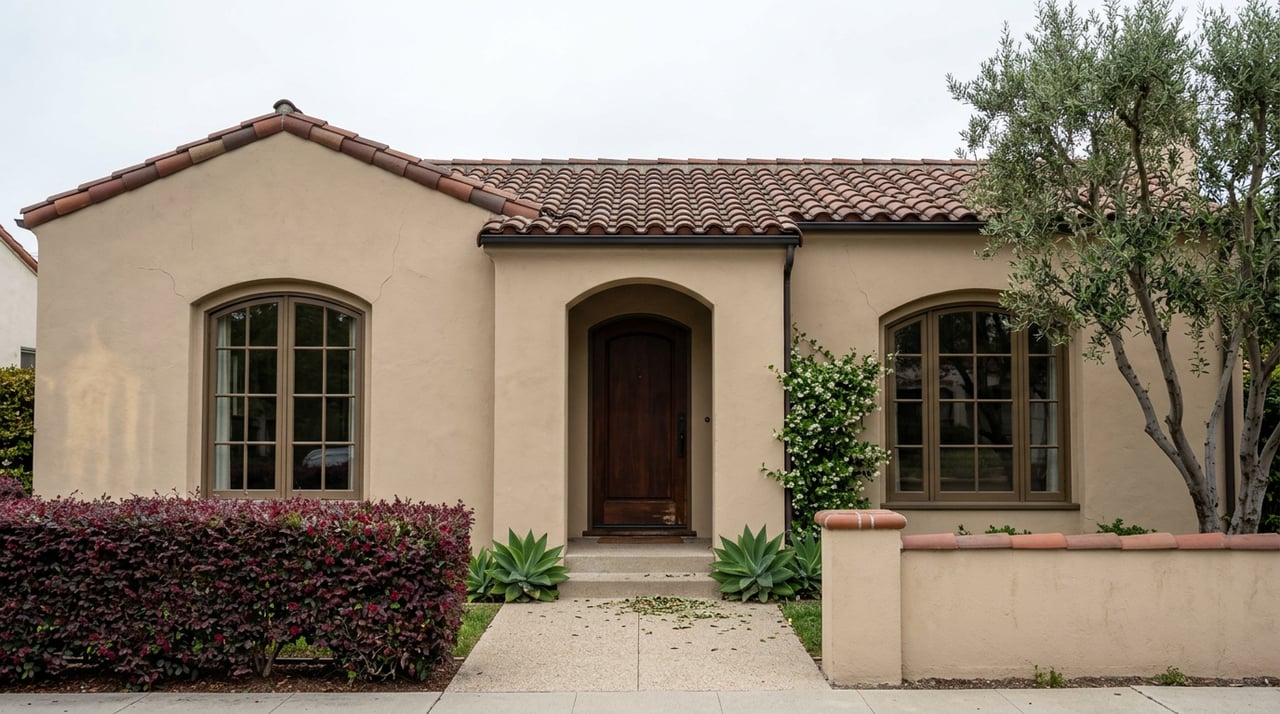
Two 1920s bungalows go on the market three blocks apart in Anaheim's Colony Historic District. Same era, same square footage, same walk to Center Street. A buyer comparing them on price alone will pick the one that shows better. A buyer who checks the county's assessment roll first might find that one of these homes carries a property tax bill lower than the other, and that the gap has nothing to do with square footage, lot size, or how recently the kitchen was redone.
It has to do with a contract that predates the current owner. Anaheim's Mills Act Program describes the income-based valuation formula used for these contracts, and Anaheim's Mills Act FAQ says the new owner automatically assumes the contract's rights and responsibilities.
Anyone who has bought a house in California knows the basic shape of Proposition 13. Assessed value climbs no more than 2 percent a year, then resets to full market value the moment ownership changes hands. That reset is the reason a home that sold for $300,000 in 2003 can carry a wildly different tax bill than the identical house next door that just changed hands for $950,000. Los Angeles County's assessor lays out the exceptions to that 2 percent cap plainly: a change in ownership, new construction, a temporary decline in value under Proposition 8, or a property designated as a restricted historical property under the Mills Act.
Most buyers know the first exception cold, because it's the one that determines their own tax bill after closing. Almost none of them think about the fourth, because it rarely comes up outside a handful of neighborhoods statewide, and Anaheim's Colony happens to be one of them.
The Mills Act is a state law from 1972 that encourages historic preservation. Anaheim's Historic Districts page says the city council adopted the program in 2000, and the city's Mills Act property list identifies four historic districts where it applies: the Colony itself, Five Points, Hoskins, and Historic Palm. The Colony is the largest by far. Its boundaries trace the footprint of the original German colony founded in 1857, cover about 1.8 square miles, and contain more than 1,000 structures the city has already inventoried as qualified.
The mechanism is what makes this worth a second look. A property under a Mills Act contract isn't assessed using comparable sales. Instead, the county assessor values it based on what it could reasonably earn in rental income, a formula built into state law specifically for these contracts. The Anaheim Colony neighborhood association, drawing on the city's own program figures, notes that current participants have seen tax reductions as high as 70 percent.
That number is the headline, but the mechanism is the story. Because the contract runs with the property rather than the person who signed it, a buyer who closes on a Mills Act home doesn't trigger the usual full-market-value reset. The county keeps applying the income-based formula.
Here's how the two paths actually diverge:
| Standard Prop 13 path | Mills Act contract path | |
|---|---|---|
| Valuation method | Income capitalization (rental value formula) | |
| What happens at sale | Reassessed to full market value | New owner inherits existing contract and formula |
| Annual increase cap | 2 percent | |
| Who it binds | The property, resets with each owner | The property, transfers automatically to new owner |
| Exit | N/A | 10-year term, auto-renews annually unless canceled |
None of this shows up in a listing description. It doesn't show up in a standard title report search either, unless someone knows to look for it. The way to actually find out is to check Anaheim's Mills Act Property Viewer, which lets you click into a historic district and see which structures currently carry a contract, or to ask the seller directly for a copy of the agreement.
That second option matters more than it sounds. City policy requires sellers of Mills Act properties to disclose the contract's requirements to a buyer, along with any unfinished items from the property's 10-Year Maintenance Plan. If the previous owner left work undone, the new owner inherits that obligation along with the tax break.
The city's own address-level list of Mills Act contracts, last updated in January 2026, shows how active this program still is. South Citron Street alone has picked up new contracts in 2021 and 2023, on top of ones already recorded in 2002, 2004, 2006, and 2014. West Chestnut Street has contracts from 2004 and 2018. This isn't a frozen historical curiosity from the 1970s. Anaheim homeowners are still applying, still getting approved, and still selling homes that carry these contracts into new ownership every year.
There's a second layer of friction worth knowing before you fall in love with a Colony bungalow. If the home is under a Mills Act contract, it cannot be demolished, full stop. Anaheim's Exterior Alterations to Mills Act Properties page says that, since April 2019, any exterior alteration to a Mills Act property requires an administrative permit reviewed by the city's Historic Preservation staff, from a new coat of paint to replacement windows. A buyer planning a quick curb-appeal refresh should know that the timeline and approval process look different here than they would three blocks outside the district boundary.
Enforcement runs on an annual cycle. The city inspects everything visible from the public right of way, mails the owner a letter noting compliance or listing outstanding items. If a property stays out of compliance long enough, state law allows the city to cancel the contract and fine the owner.
Does the Mills Act contract cancel when the home sells? No. It transfers automatically to the new owner along with all the rights and obligations that came with it.
Can the contract be canceled after I buy? Yes.
Does this affect what I can change about the house? Yes. Exterior alterations on a Mills Act property go through an administrative permit reviewed by Historic Preservation staff, a step that doesn't apply to non-contract homes in the same neighborhood.
What happens if maintenance falls behind? The city notifies the owner by mail after each annual inspection. If the property remains out of compliance, state law lets the city cancel the contract and fine the owner.
A median price tells you what the Colony costs on paper. It doesn't tell you which valuation formula your specific address runs on, what you're inheriting from the last owner's maintenance file, or what it will take to repaint the porch. If you're comparing homes in Anaheim's historic districts and want someone to pull the contract before you write an offer, BAIKHOME can walk the paperwork with you and help you get a clear read on what a specific property actually costs to own, not just what it costs to buy.
This article is general information, not legal, tax or financial advice. Consult a qualified professional about your situation.




Our mission is to become the most trusted source of innovative real estate solutions, creating exceptional experience for all we serve.

BAIKHOME
(714) 882-9212
[email protected]
6281 Beach Blvd Ste 103
Buena Park, CA 90621
ETHAN BAIK | CA DRE# 01927947